

Service 03 · Run · Maintenance division
Maintenance that you can see working
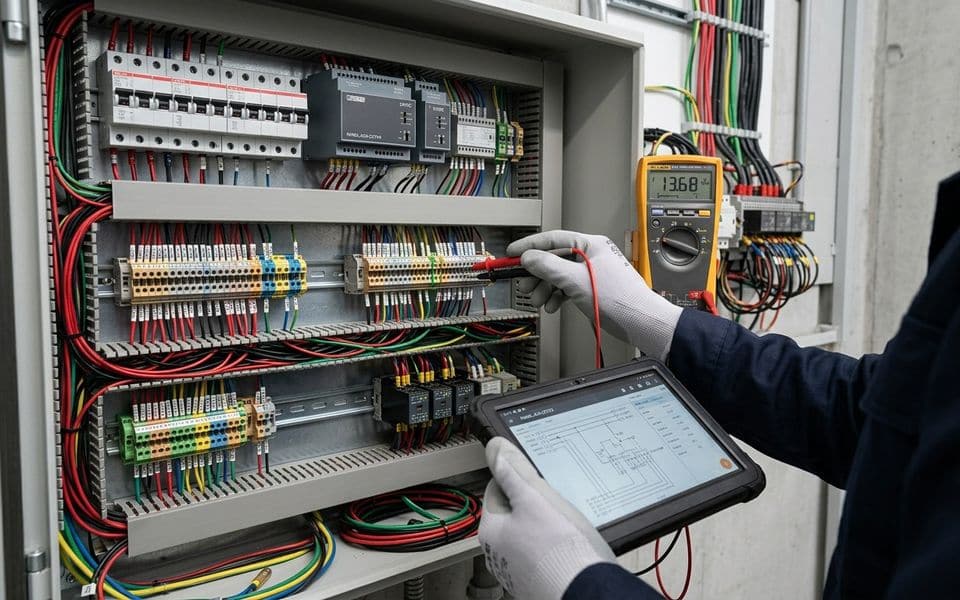
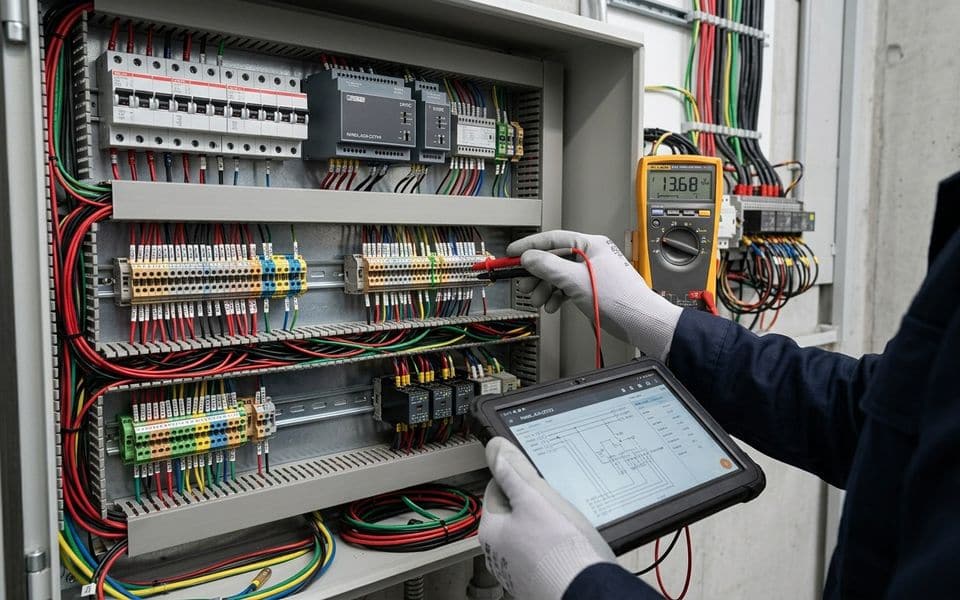
Maintenance runs as its own division, separate from project work. Every contract states what is inspected, how often, how fast we respond, and what you receive afterwards.
Three kinds of maintenance
- Preventive maintenance (PPM) is planned work on a fixed schedule: cleaning, inspection, testing and adjustment before something fails.
- Corrective maintenance is the response when something does fail: diagnosis, repair or replacement, and a record of the cause.
- Mandatory maintenance is the work and records that an authority, insurer, landlord or your own policy requires. We keep those records in the format the requirement asks for, so an inspection doesn't become a search through emails.
A typical preventive schedule
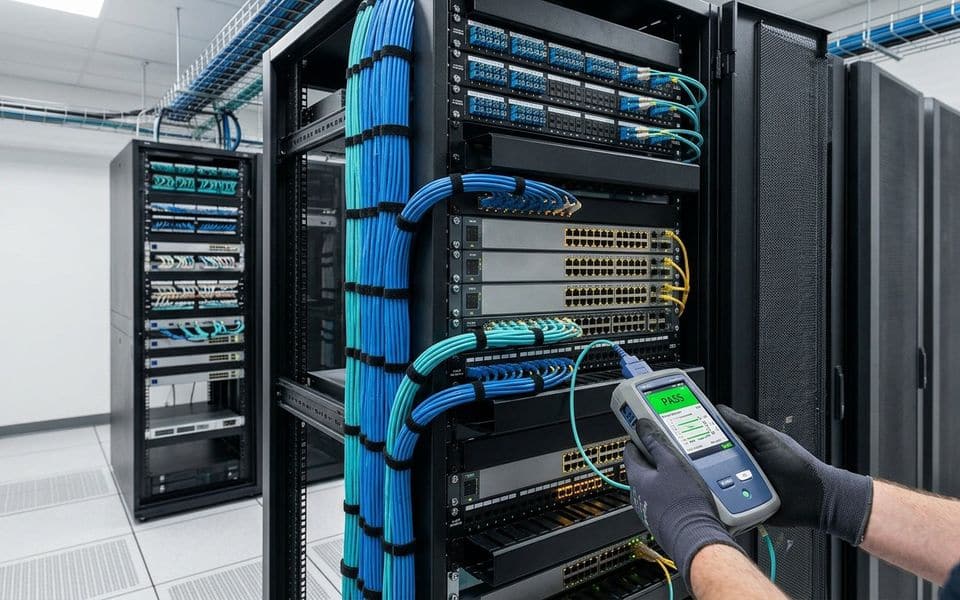
Frequencies are set per site, from the manufacturer's guidance, the environment and how critical each system is. A dusty outdoor site needs more frequent camera cleaning than an office floor. This is an example of how a schedule is structured:
| System | Monthly | Quarterly | Annually |
|---|---|---|---|
| CCTV | Recording health, retention check, failed-camera report | Lens and housing cleaning, view checks against plan, focus | Firmware review, disk health trend, full export test |
| Access control | Event log review, offline door check | Door function tests, lock and closer adjustment, reader checks | Fire release test with the fire contractor, user list audit |
| Intrusion & perimeter | Alarm history review | Detector walk tests, tamper checks | Perimeter re-calibration, signalling path test |
| Network & Wi-Fi | Switch and PoE alarms | Port and uplink review, AP health | Firmware, configuration backup, coverage spot check |
| UPS & batteries | Alarm and load check | Room temperature, visual inspection | Battery capacity or impedance test |
Response targets
Every contract defines priorities and response targets in writing. The targets depend on the site's location and the contract level, so the table below shows the structure rather than a promise for every site.
| Priority | Example situation | What the contract defines |
|---|---|---|
| P1 Critical | Recording stopped, main entrance can't be secured or opened, perimeter system down | Remote response time, on-site attendance time, temporary measure |
| P2 High | Several cameras offline, one controlled door failed | Attendance time and target fix time |
| P3 Normal | Single camera fault, minor defect | Fix within an agreed number of working days |
| P4 Planned | Change requests, moves, additions | Scheduled with the client |
Each fault gets a reference number, a timestamped log from report to closure, and the root cause. Monthly reports show response times achieved against the contract, so you can see whether we kept our word.
Systems installed by others
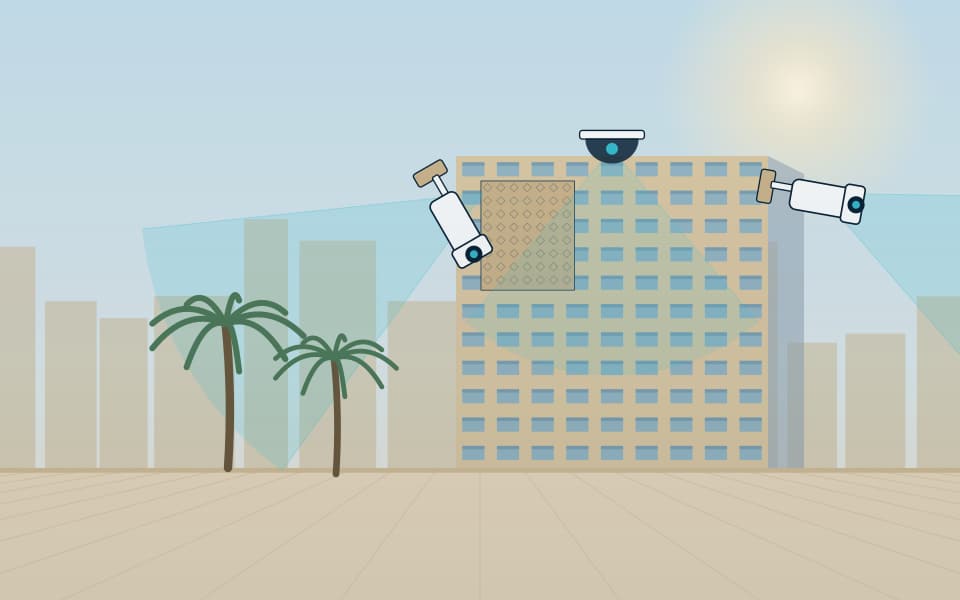
We maintain systems we didn't install. Every takeover starts with a condition survey: what exists, what works, what doesn't, and what documentation is missing. We build the asset register, recover or reset administrator access with your authorisation, and agree a list of defects that sit outside the contract until they are fixed. That way the maintenance contract starts from a known baseline.
What you receive
- An asset register for every device under the contract.
- A visit report after each preventive visit: what was checked, results, photos, and defects found.
- A fault log with response and fix times.
- Recommendations for replacement before end-of-life equipment fails.
- Configuration backups kept current.
Spare parts are supplied at cost plus an agreed handling margin or by you, as the contract states. For critical sites we recommend you hold a small stock of critical spares on site.