

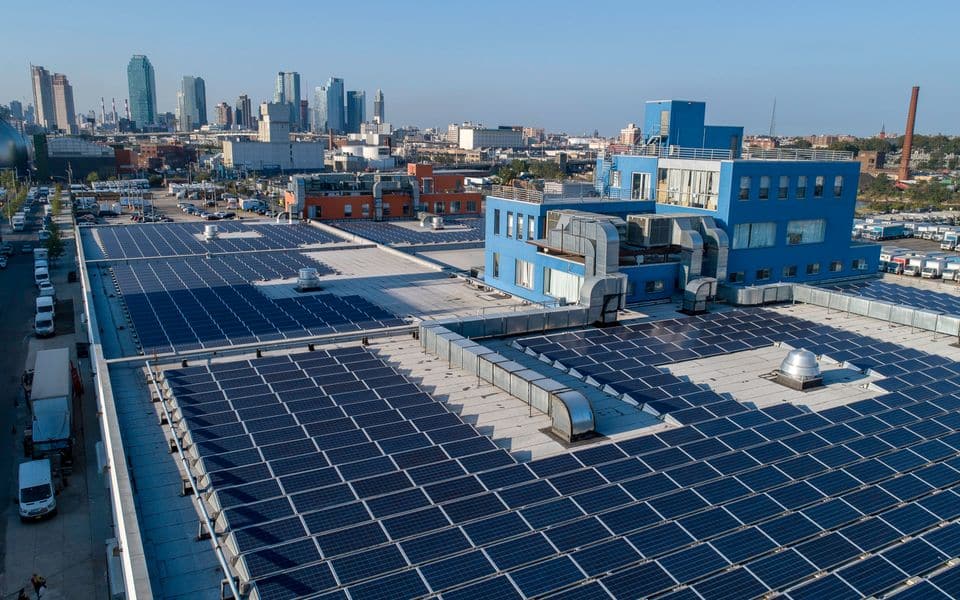

PWR-02 · Power continuity
Solar PV designed for heat, dust and the load it has to carry
On-grid, hybrid and off-grid photovoltaic systems for buildings and for remote security points. We start from the energy the site uses and the hours it must be covered, then design the array, inverter and batteries around that.
Choosing on-grid, hybrid or off-grid
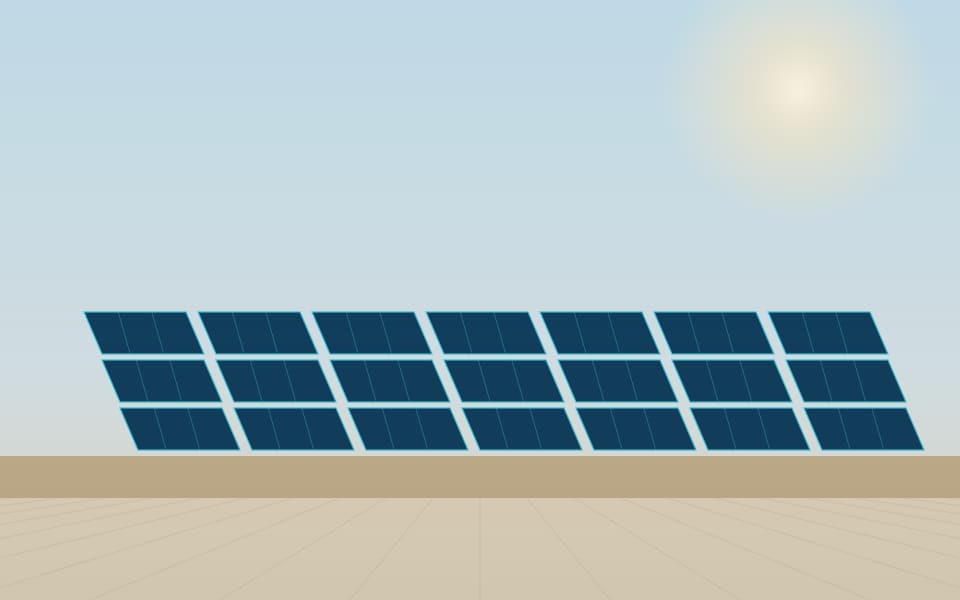
The three system types answer different questions. On-grid reduces the energy bought from the utility. Hybrid adds storage so that critical loads keep running through an outage. Off-grid supplies a point that has no mains at all.
| Type | Grid connection | Batteries | During a mains outage | Typical use |
|---|---|---|---|---|
| On-grid | Yes | No | Stops: the inverter disconnects when the grid fails (anti-islanding protection) | Bill reduction on roofs and car-park shades |
| Hybrid | Yes | Yes | Keeps the backed-up circuit running while the battery lasts | Buildings that want savings and backup for critical loads |
| Off-grid | No | Yes, sized for days of autonomy | It is the only source | Perimeter cameras, gatehouses, telecom points |
The point most often missed: a plain on-grid system provides no backup. When mains fails, the inverter disconnects to protect people working on the network. If the goal includes keeping cameras or access control running, the design needs storage and a separate backed-up circuit, or a UPS alongside it.
On-grid and hybrid systems connected to the distribution network need approval from the utility before connection. We prepare the technical package for that application (single-line diagram, equipment data and protection settings), and the export connection is not energised until approval is given.
Designing for Saudi heat and dust

Module ratings are given at standard test conditions, with the cells at 25 °C. On a Saudi roof in summer the cells run far hotter than the air, often 70 °C or more. Crystalline silicon modules lose roughly 0.3–0.4 % of their power for every degree above 25 °C, so at peak summer temperatures output can be some 15 % below the nameplate before any other loss is counted.
Temperature also changes voltage, and that drives string design. Module voltage rises on cold mornings and falls in the heat. We size each string so that the open-circuit voltage at the coldest expected temperature stays below the inverter's maximum input voltage, and the operating voltage at the hottest stays inside its MPPT window.
Dust then reduces output further. How much depends on the site, the season and the tilt, and a single dust storm can cut output sharply in a day. We put a cleaning frequency into the yield estimate and the maintenance plan instead of assuming clean panels, and water supply and safe roof access for cleaning become design inputs.
- Inverters reduce their output when hot. We place them in shade with airflow, not on a sun-facing wall.
- DC cabling is sized for voltage drop and for derating at roof temperatures, with UV-resistant insulation and protected routes.
- Mounting structures are designed for the wind load and fixed without compromising the roof waterproofing.
- Protection: earthing, surge protection on the DC and AC sides, and clearly labelled DC isolation that maintenance staff and emergency responders can find.
Powering remote security points

A camera at the far end of a perimeter, a gatehouse or a barrier on an access road may be hundreds of metres from the nearest distribution board. Trenching, cable and a protected feeder can cost more than a small off-grid system. In those cases a pole-mounted array, a charge controller and a battery enclosure can run the device, while a wireless link or fibre carries the video.
Off-grid sizing works backwards from the worst day:
- Load: the device's real 24-hour consumption, including IR illuminators at night, heaters or fans and the radio link. Night loads matter most because they come entirely from the battery.
- Autonomy: how many days the point must run with little usable sun, through dust storms or with soiled panels. For security points this is typically two to three days, agreed with you.
- Battery: capacity for that autonomy at a usable depth of discharge, derated for temperature. Batteries go in a shaded, ventilated enclosure; in a sealed box in direct sun they age quickly.
- Array: sized for the lowest-yield month in soiled condition, with margin to recharge after a run of poor days.
We also design remote monitoring of battery voltage and charge state, so a failing point is visible before the camera goes dark.
We provide design, installation, commissioning and maintenance services. Panels, inverters, charge controllers and batteries are procured by you or your contractor against our specification.
Our part, start to finish
What we do on a solar PV project
We don't sell the equipment. We design the system, install and commission it, and keep it producing.
Design & consulting
- Energy profile, critical loads and system type
- String sizing to the MPPT window with temperature corrections
- Yield estimate with heat and soiling losses
- Technical package for utility approval
Installation
- Mounting and roof or pole fixing
- Stringing, DC protection and earthing
- Inverter and charge controller programming
- Polarity, insulation and string voltage tests, with records
Maintenance
- Panel cleaning at an agreed frequency
- Yield checks against the estimate
- Inverter and battery health checks
- Connection and mounting inspections
Before you buy
Questions to settle first
These decide cost and yield more than the brand of panel. We work through them with you at survey stage.
- Is the goal bill reduction, backup for critical loads, or power for a point with no mains?
- How much roof or ground area stays free of shade through the day?
- What has to run at night, and for how long?
- Who will clean the panels, how often, and is there water and safe access?
- For on-grid, who submits the utility application, and what does the utility ask for?
- Where can inverters and batteries sit out of direct sun?
Works alongside
Related systems

Power continuity
How UPS, central battery, generator and solar fit together.
Read more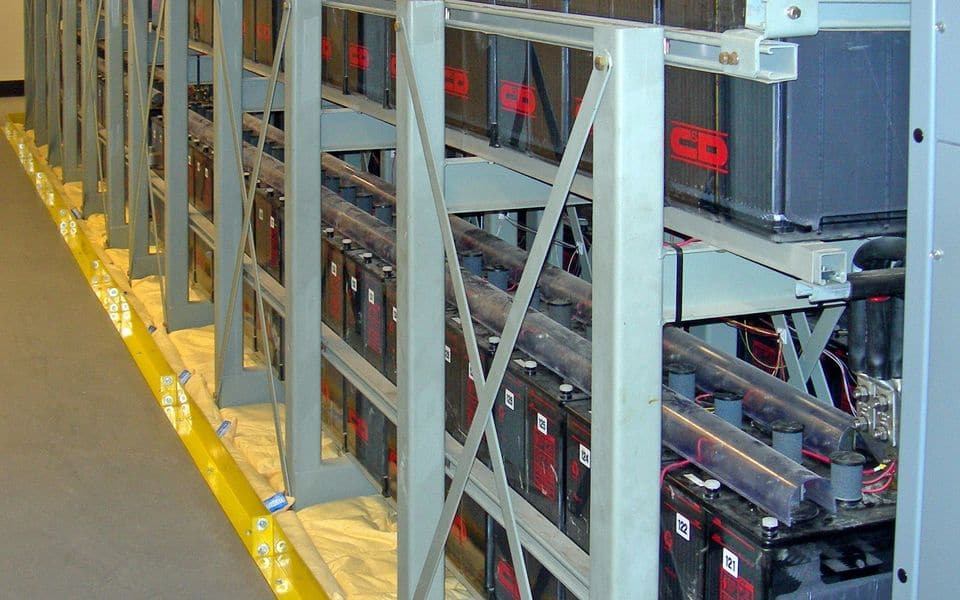
UPS systems
Online UPS sized by load and autonomy, with batteries that last.
Read more
Central battery systems
Monitored power for emergency lighting to EN 50171.
Read more
Generator interfaces
ATS, transfer and the loads behind a standby generator.
Read moreGallery
Solar PV in context
Illustrations show typical arrangements, not specific projects. Select an image to enlarge it.